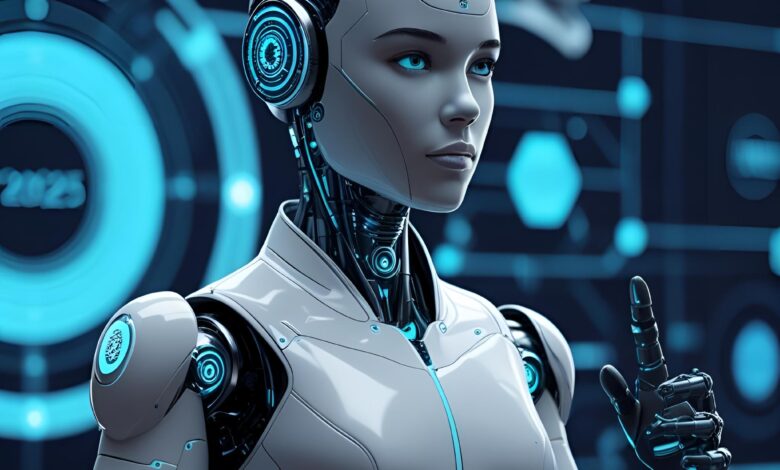
As we approach the year 2025, the world stands on the brink of an artificial intelligence (AI) revolution that promises to reshape our lives, businesses, and societies. “2025: The Year AI Goes Mainstream – What You Need to Know” encapsulates an era where AI technologies transcend their earlier experimental phases and become integral to everyday experiences. In this article, we will explore the transformative potential of AI, its implications for various industries, and the necessary adaptations we must make to thrive in this new landscape.
The Rise of AI Technology in Everyday Life
The incorporation of AI technologies into daily life is steadily becoming a reality. From virtual assistants like Siri and Alexa to advanced algorithms that personalize our online experiences, AI is no longer a concept confined to science fiction. By 2025, we can expect AI to become ubiquitous, enhancing everything from our homes to our workplaces. Advancements in natural language processing (NLP) and machine learning (ML) will enable smarter interfaces that interact fluidly with human emotions and intentions, making technology more intuitive.
As AI continues to evolve, it will penetrate deeper into sectors like healthcare, finance, transportation, and agriculture. In healthcare, for instance, AI can analyze vast datasets to assist in diagnostics, predictive analytics, and personalized medicine. By streamlining these processes, AI will not only improve patient outcomes but also cut down healthcare costs. In financial services, AI-powered algorithms will help in fraud detection and risk management, making systems more secure and efficient. Therefore, understanding the rise of AI technology in everyday life is crucial for preparing for the changes it will bring.
The Impact of AI on Employment
While the integration of AI into various sectors holds great promise, it also raises concerns about employment. Automation is likely to displace certain job functions, particularly those that are repetitive and can be effectively handled by machines. According to studies, up to 30% of jobs could be automated by the year 2030, with many of these changes expected to happen by 2025. However, it is essential to view this transition through a broader lens.
Rather than solely focusing on job loss, it is vital to consider the new roles that will emerge as a direct result of AI integration. Positions in data science, AI ethics, machine learning engineering, and UX design will gain prominence as organizations look for talent to navigate this new frontier. Upskilling and reskilling will be key to empowering workers to adapt to changing job requirements, ensuring that we leverage human creativity and emotional intelligence in ways that artificial intelligence cannot replicate.
AI in Business: Transforming Operations and Customer Experience
The business landscape is set for a radical transformation driven by AI technologies. Companies will adopt AI solutions to streamline operations, improve efficiency, and reduce operational costs. Predictive analytics powered by AI will enable businesses to forecast market trends, allowing for more informed decision-making. By 2025, many companies will rely on AI-driven solutions for supply chain optimization, performance monitoring, and resource allocation, significantly enhancing productivity.
Furthermore, AI will revolutionize customer experience. Chatbots and virtual assistants will offer 24/7 customer support, providing instant solutions to consumer queries. Personalized marketing strategies powered by AI algorithms will allow businesses to tailor their offerings based on consumer behavior and preferences. As companies leverage data-driven insights to enhance the customer journey, the businesses that effectively integrate AI will gain a competitive edge in their respective markets.
Ethics and Regulations in the Age of AI
As the influence of AI grows, so too does the importance of ethical considerations. Issues surrounding privacy, bias, and accountability must be addressed to ensure that AI technologies are developed and deployed responsibly. With algorithms capable of making decisions, the question arises: who is responsible when AI systems err? As we approach 2025, governments and organizations will need to establish comprehensive regulations that govern AI use. These frameworks must prioritize transparency, fairness, and ethical considerations to instill public trust in AI technologies.
Moreover, addressing bias in AI systems is crucial for preventing discrimination based on race, gender, or socioeconomic status. Development teams must commit to inclusive practices, employing diverse groups to create AI systems that are representative of the population they serve. By implementing guidelines that enhance fairness and accountability, we can harness the benefits of AI while minimizing its risks.
The Future of Education with AI
The education sector stands poised for a transformation led by artificial intelligence. By 2025, AI tools will facilitate personalized learning experiences, allowing educators to tailor curricula to meet individual student needs. Intelligent tutoring systems will provide real-time feedback, helping students grasp concepts at their own pace. This adaptive learning environment will not only improve academic outcomes but also foster a love for learning by offering students a more engaging and relevant educational experience.
Beyond personalized learning, AI can also streamline administrative tasks, allowing educators to devote more time to teaching and mentoring. Automating grading and scheduling will free up valuable resources, enabling institutions to allocate their efforts toward improving overall educational quality. As we embrace the future of education with AI, we must ensure teacher training programs are equipped to handle new technologies, bridging the gap between traditional teaching methods and innovative AI solutions.
Conclusion
The year 2025 heralds a pivotal moment in history as AI technologies go mainstream. From revolutionizing industries to redefining the workforce, the implications are far-reaching. While challenges like employment displacement and ethical considerations must be addressed, the transformative power of AI offers unprecedented opportunities for innovation and growth. As we navigate this AI-driven future, preparation, adaptability, and responsible deployment will be crucial in shaping a world that is not only technologically advanced but also inclusive and ethical.
FAQs
What is AI and how does it work?
Artificial Intelligence (AI) refers to the simulation of human intelligence in machines that are capable of performing tasks such as reasoning, learning, and problem-solving. AI works through algorithms and data analysis to mimic cognitive functions.
Will AI take away jobs in the future?
While AI will automate certain tasks, it will also create new job opportunities in areas like data science, AI ethics, and machine learning. Upskilling and reskilling will be essential to adapt to the changing job landscape.
How can businesses prepare for AI integration?
Businesses can prepare by investing in AI technology, training employees, and adopting a culture of continuous learning. Understanding market trends and consumer behavior insights from AI can also provide a competitive advantage.
What ethical considerations are involved in AI?
Key ethical considerations include privacy, bias, accountability, and transparency. Establishing regulations to govern AI use while ensuring fair and inclusive practices is crucial for responsible AI development.
How will AI impact education by 2025?
AI is expected to personalize learning experiences, automate administrative tasks, and enhance educational quality by providing tailored support and resources to both students and educators.
[ad_2]